Before the Model Runs: Why Enterprise AI Projects Collapse in the Data Preparation Phase
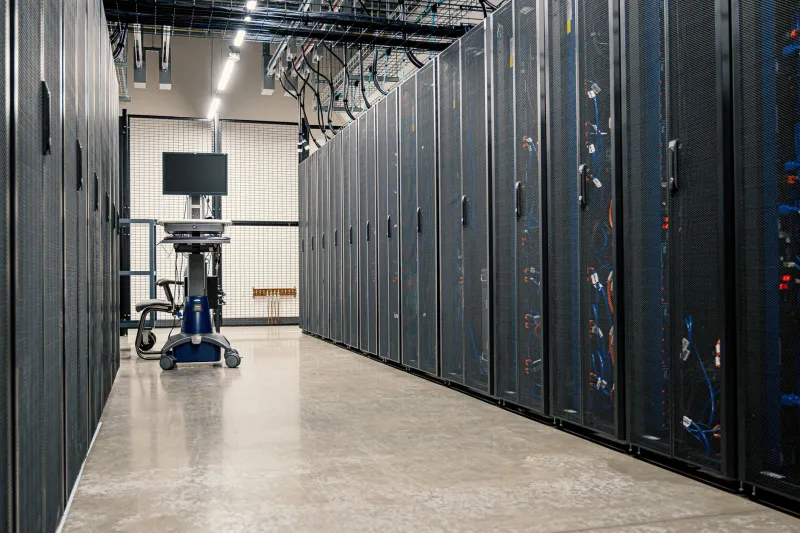
There is a persistent and costly mythology surrounding enterprise artificial intelligence: that the hard part is building the model. Organizations recruit data scientists, license sophisticated platforms, and brief their boards on the competitive advantages that machine learning will unlock. Then, months later, the initiative stalls — not because the algorithms were flawed, but because the organization could not reliably feed them clean, consistent, and properly governed data.
This pattern repeats itself across industries with remarkable consistency. According to multiple industry surveys conducted over the past several years, data professionals routinely report spending upward of 60 to 80 percent of their time on data collection, cleaning, and pipeline construction — activities that generate little visible progress and receive proportionally little investment. For enterprise leaders who approved AI budgets based on vendor demonstrations and conference keynotes, this operational reality often arrives as an unpleasant surprise.
The consequences extend well beyond delayed timelines. When organizations discover mid-initiative that their data infrastructure cannot support production AI workloads, they face a difficult choice: invest heavily in foundational work that was never scoped, or abandon the initiative and absorb the sunk cost. Neither outcome serves the enterprise.
The Infrastructure Gap That Most AI Roadmaps Ignore
Enterprise data environments are rarely designed with machine learning in mind. Legacy systems accumulate data in formats optimized for transactional processing, not analytical consumption. Business units maintain separate data stores that evolved independently, creating definitional inconsistencies that appear minor in isolation but compound into significant problems at scale. A customer identifier that means one thing in a CRM system may mean something subtly different in a billing platform, and reconciling those discrepancies across millions of records is not a weekend project.
Beyond structural inconsistencies, enterprises contend with data quality issues that are rarely visible until a model begins consuming the data and producing anomalous outputs. Missing values, duplicate records, outliers introduced by manual data entry, and historical records that predate current business definitions all degrade model performance in ways that are difficult to diagnose after the fact.
Building the pipeline infrastructure to collect, validate, transform, and deliver data to a machine learning model — and to do so reliably at production scale — requires engineering effort that is fundamentally different from the work of model development. It demands expertise in data engineering, systems integration, and operational reliability that many AI teams are not structured to provide.
Governance Adds Complexity That Timelines Rarely Reflect
Data preparation in an enterprise context is not purely a technical problem. It is also a governance problem, and governance problems move at the pace of organizational decision-making, not engineering sprints.
Before data can be used to train a machine learning model, questions of ownership, access, and permissible use must be resolved. In regulated industries — financial services, healthcare, insurance — those questions carry legal and compliance dimensions that require review cycles measured in weeks or months. Even in less heavily regulated sectors, enterprise data governance frameworks often impose controls that were designed for reporting and analytics use cases, not for the continuous, automated consumption patterns that AI pipelines require.
Organizations that treat governance as a post-development concern consistently encounter the same outcome: a model that is technically functional but operationally blocked because the data feeding it has not been cleared for the intended use. Retrofitting governance onto an AI pipeline after the fact is invariably more expensive and disruptive than incorporating it from the outset.
Why Proof-of-Concept Success Creates False Confidence
A significant contributor to the data preparation problem is the structure of how enterprise AI initiatives typically begin. Proof-of-concept projects, by design, operate under conditions that do not reflect production reality. Data scientists curate a representative dataset, address obvious quality issues manually, and build a model that performs well under controlled conditions. Leadership observes the demonstration, approves further investment, and expects the production deployment to follow a similar trajectory.
What the proof-of-concept obscures is that the data curation work performed manually by a skilled practitioner on a sample dataset must, in production, be automated, scaled, and maintained continuously. The hours a data scientist spent cleaning a few thousand records become an engineering challenge involving millions of records refreshed on a recurring schedule. The institutional knowledge that informed those manual decisions must be encoded into validation logic that can operate without human intervention.
This gap between proof-of-concept and production is where the majority of enterprise AI initiatives lose momentum. Recognizing it before the transition begins — rather than after — is essential to building a credible deployment plan.
A Framework for Realistic AI Investment Planning
Enterprise leaders seeking to build machine learning capabilities on a sustainable foundation should consider restructuring how AI initiatives are scoped and resourced from the beginning.
Conduct a data readiness assessment before scoping the model. Before any model development begins, a structured evaluation of the relevant data sources — their quality, consistency, accessibility, and governance status — should inform the project plan. This assessment should produce an honest inventory of the remediation work required, with effort estimates attached.
Allocate engineering resources proportionate to the actual workload. If industry benchmarks suggest that data preparation will consume the majority of project effort, the resource plan should reflect that reality. Staffing a project primarily with data scientists while underinvesting in data engineering is a structural mismatch that will surface as a bottleneck.
Incorporate governance review into the project timeline from day one. Compliance, legal, and data governance stakeholders should be engaged at the outset, not after the technical work is complete. Their review cycles are not negotiable and should be treated as fixed constraints in the schedule.
Treat data pipeline development as a product, not a project. Production AI systems require ongoing data pipeline maintenance. The organizational model for AI should include dedicated resources for pipeline reliability, data quality monitoring, and schema change management — functions that do not end when the initial model ships.
Establish success metrics that account for operational stability, not only model performance. A model that performs well in testing but degrades in production due to data drift or pipeline failures has not succeeded. Operational metrics — pipeline uptime, data freshness, quality thresholds — should be part of the definition of done.
The Competitive Cost of Misdiagnosis
Enterprise organizations that continue to treat data preparation as a subordinate concern in AI programs will find themselves in a recurring cycle: ambitious initiatives, early enthusiasm, mid-program stalls, and incomplete deployments. The competitive cost of that cycle is not merely the wasted investment in individual projects. It is the compounding disadvantage of falling further behind organizations that have built the foundational infrastructure to move from AI concept to production capability with speed and confidence.
The organizations that are realizing durable value from machine learning are not necessarily those with the most sophisticated models. They are the organizations that invested, deliberately and early, in the unglamorous work of making their data production-ready. That investment is less visible than a new AI platform or a high-profile hire, but it is the prerequisite for everything that follows.